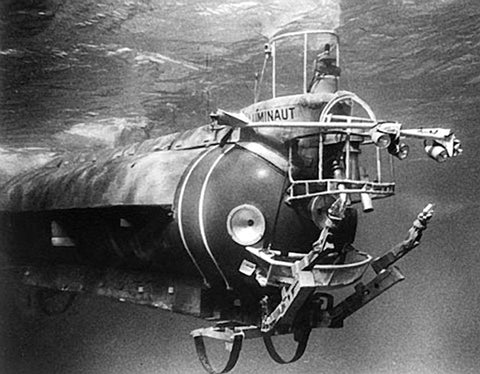
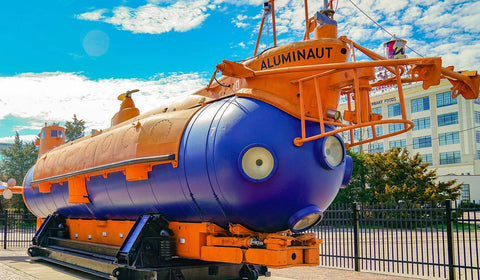
When we think of submarines, we often picture massive steel vessels built for stealth and power. But in the 1960s, a radical innovation shifted the course of underwater exploration: Aluminaut, the world’s first aluminum-hulled submarine. At a time when steel was considered the undisputed choice for deep-sea vehicles, Aluminaut introduced an entirely new approach to deep-ocean engineering—one that would influence future submersibles for decades. This groundbreaking sub wasn’t just a technological marvel; it became a symbol of ingenuity and the human quest to push boundaries. Let’s dive deep into Aluminaut’s story and its lasting legacy.

Why Aluminum? Breaking the Steel Barrier
Before Aluminaut, steel dominated submarine construction due to its proven strength and resilience under pressure. However, steel comes with two significant drawbacks: weight and corrosion. Deep-sea exploration demands lighter materials to maximize payload and efficiency, while minimizing maintenance issues caused by seawater.
Aluminum offered an exciting solution:
Lightweight Advantage: Aluminum’s low density allowed Aluminaut to carry more equipment without becoming unwieldy.
Corrosion Resistance: Unlike steel, aluminum resists rust in saltwater environments, reducing upkeep and extending operational life.
Strength-to-Weight Ratio: Despite being lighter, aluminum provided sufficient structural integrity to withstand extreme ocean pressures.
This innovation wasn’t without challenges—aluminum welding required specialized techniques—but the payoff was revolutionary.

The Birth of Aluminaut
Aluminaut was conceived and built in the early 1960s by Reynolds Metals Company, an industry leader in aluminum production. The project aimed to showcase aluminum’s versatility and potential for high-stress applications. Measuring 50 feet long and weighing about 80 tons, Aluminaut was no small experiment—it was a full-fledged deep-diving workhorse capable of reaching depths of 15,000 feet.
Unlike military submarines, Aluminaut focused on scientific and industrial applications:
Deep-sea research and oceanographic studies.
Recovery of lost objects and sunken equipment.
Support for undersea construction and cable-laying projects.

Missions That Made History
Aluminaut wasn’t built just to break records; it had a purpose, and it proved itself in the field. Some of its most notable missions include:
The USS Thresher Recovery (1963): Aluminaut assisted in searching for debris from the lost U.S. Navy submarine, demonstrating its value in deep-sea recovery efforts.
Rescue of the Alvin (1969): When the famous research submersible Alvin sank in the Atlantic, Aluminaut played a critical role in retrieving it from the ocean floor.
Undersea Industrial Work: From inspecting underwater pipelines to helping with cable installations, Aluminaut was indispensable in commercial and scientific tasks.
These missions solidified Aluminaut’s reputation as more than an experimental craft—it was a practical, reliable tool for real-world challenges.
Technological Influence and Legacy
Although Aluminaut was retired in the 1970s, its impact remains undeniable. Here’s how it shaped future developments:
Material Innovation: Its success proved that alternative materials like aluminum—and later, titanium and composites—could thrive in deep-sea environments.
Operational Model: Aluminaut introduced a template for multi-role submersibles, blending scientific and industrial capabilities.
Inspiration for Future Designs: Many modern research subs and remotely operated vehicles (ROVs) borrow concepts pioneered by Aluminaut, from pressure-resistant hulls to modular equipment layouts.
Today, Aluminaut resides at the Science Museum of Virginia, serving as a testament to a daring leap in engineering and imagination.

Challenges and Lessons Learned
Despite its achievements, Aluminaut also taught engineers important lessons:
Cost and Complexity: Aluminum welding and fabrication were expensive and required specialized skills.
Maintenance of Pressure Hull Integrity: While corrosion-resistant, aluminum still demanded strict oversight for fatigue and stress points.
Transition to New Materials: Aluminaut’s experience paved the way for titanium, which offered even greater depth tolerance and longevity.

Aluminaut: A Deep Legacy That Floats Above Time
Aluminaut wasn’t just a submarine—it was a bold experiment that redefined what was possible in ocean exploration. By replacing traditional steel with aluminum, it opened new doors for deep-sea engineering and inspired innovations that endure to this day. From rescuing lost vessels to advancing marine science, Aluminaut proved that pushing boundaries leads to extraordinary breakthroughs. In an age when both the ocean and space are frontiers of discovery, the story of Aluminaut reminds us that innovation often begins with one daring idea—and a hull made of something unexpected.