In the early 1980s, video games weren’t just entertainment—they were a revolution. As arcade machines buzzed and beeped in neon-lit halls across the world, Atari sought to bring that thrill home. Among their most beloved adaptations was Asteroids for the Atari 2600, released in 1981. Though it lacked the vector graphics and sheer horsepower of its arcade counterpart, this cartridge packed a cosmic punch—and helped define a generation of home gamers. Today, we take a nostalgic look back at Asteroids 2600, exploring what made it iconic, how it translated arcade magic into the living room, and why it still resonates with retro enthusiasts.

From Arcade Glory to Console Greatness
Originally released in arcades in 1979, Asteroids quickly became a phenomenon. Players were captivated by its minimalist vector display and deceptively simple gameplay: shoot rocks, avoid collisions, and stay alive as long as possible.
But when Atari ported Asteroids to the 2600 in 1981, they faced a significant challenge. The home console couldn’t replicate the fine lines or smooth controls of the arcade version. Instead, developers had to get creative—rebuilding the game from the ground up using raster graphics, joystick-friendly mechanics, and re-tuned physics.
The result? A game that felt like Asteroids even if it didn’t look quite the same. Players didn’t care about the graphical downgrade—they were just thrilled to have a piece of arcade history in their own home.

What Made Asteroids 2600 So Addictive
Despite technical limitations, Asteroids 2600 retained the core gameplay loop that made it so beloved: float, fire, and survive. Here’s why it worked so well:
Endless Challenge: There was no “winning” Asteroids. You played for points and personal glory, testing reflexes and endurance.
Simple Controls, Deep Gameplay: Rotate, thrust, and shoot—that’s it. But mastering inertia and movement in zero-G was a skill few could perfect.
Quick Restart Loop: Died in 30 seconds? No problem. Hit reset and dive back in. That fast loop encouraged “just one more go” gameplay.
Multiplayer Madness: Two-player alternating mode meant siblings and friends could battle for high scores, adding a competitive layer that made sleepovers and family nights more exciting.

Graphics, Sounds, and That Iconic Pew Pew
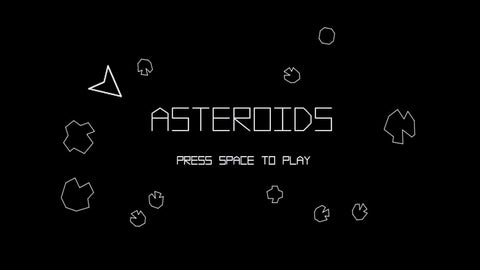
Let’s be honest: Asteroids 2600 wasn’t going to win any awards for visual fidelity. The asteroids were now jagged, blocky shapes; your ship was a flickering triangle. But in its limitations lay its charm.
The Sounds: The hum of your ship, the crackling blips of your shots, the satisfying pop when an asteroid shattered—these weren’t just effects, they were part of the identity.
The Flicker: Thanks to sprite limitations on the 2600, Asteroids was one of many games that flickered under heavy action. Far from a flaw, this flicker became oddly nostalgic, a quirk now beloved by retro purists.
Even the lack of a soundtrack added to the tension—just you, the silence of space, and those threatening rocks.
Cultural Impact and Collector Appeal
In 1981, Asteroids 2600 wasn’t just a game—it was a status symbol. Owning the cartridge meant you had access to one of the most famous arcade titles without leaving your house.
It also helped cement Atari’s dominance in the early home console market. For many players, Asteroids was their first introduction to fast-paced, reaction-based gameplay. It influenced later space shooters, from Defender to Gradius and beyond.
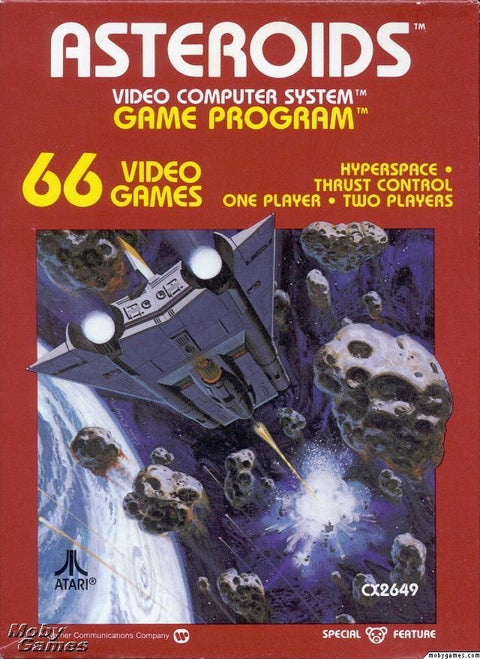
Today, boxed copies of Asteroids 2600 are highly sought-after by collectors. Its retro packaging, featuring dramatic asteroid-blasting artwork, is a time capsule of early gaming aesthetics.

Why We Still Love It
Why does a game from 1981, with blocky graphics and no soundtrack, still hold a place in our hearts?
It was pioneering: Bringing arcade action into the home was still a novelty, and Asteroids nailed it.
It’s timeless: The core mechanic—dodge, shoot, survive—remains compelling even today.
It’s pure: No microtransactions, no save points, no tutorials. Just raw, unfiltered gameplay.
For many of us, Asteroids was our introduction to the world of video games. And like a first love, we never really forgot it.

Atari 2600 Asteroids: A Legacy Written in Pixels
Asteroids for the Atari 2600 may seem primitive by modern standards, but it was—and remains—a milestone in video game history. It proved that home consoles could offer thrilling, replayable experiences, even when faced with hardware limitations.
More importantly, it gave us memories: of firing up the console on a Saturday morning, joystick in hand, watching those rocks drift lazily across the screen before all chaos broke loose. In a world of ever-evolving graphics and complex mechanics, Asteroids reminds us that sometimes, all you need is a triangle, some space rocks, and a goal to survive.